Concrete Grounds Discussed for Fence Contractors
Fence work live or pass away on the ground work. A fencing can look great for the very first couple of months and still fall short due to the fact that the footings were hurried, undersized, put right into the incorrect problems, or installed without checking out the website properly. For fence contractors, fence installers, and fencing contractors Melbourne, the concrete footing is where workmanship meets engineering.
I've seen the pattern more times than I 'd like to confess. A client wants the fencing up swiftly, the messages enter, the concrete obtains put, everybody carry on. After that the initial hefty rain hits, the dirt shifts, and the fencing leans like it's tired. Often it breaks, in some cases it simply gradually bends. The repair work is normally extra expensive than doing it right the first time, especially if the failing drags out right into multiple bays.
This guide breaks down exactly how concrete grounds work, how to size them properly, how to pour them so they really do their task, and just how to avoid the errors that turn a straightforward secure fencing job into a rework expense for the fencing company.
What a concrete footing truly does
A ground is not just "something concrete underneath the post." It's a system that moves tons into the soil and secures the blog post versus activity brought on by wind, side stress, swelling or shrinkage of soil, and water movement.
For fencing contractors, the main forces are side tons. Wind presses. A person leans. An entrance takes the constant tension of opening and closing. If the ground does not give enough embedment, the dirt can not "hold" the message, and the whole setting up begins to shift.
Concrete contributes in two ways:
- It withstands post pull-out and rotation with the embedment length and the bond in between article and concrete.
- It spreads loads so the soil isn't asked to carry everything at a single point.
If you miss either part, you can obtain a fence that holds momentarily yet after that sheds alignment after weather cycles. And weather condition cycles are the fact in Melbourne, where heavy storms, seasonal wetting and drying, and changing groundwater levels can transform "firm ground" into "moving ground" over a few years.
Choosing the right ground type
Most fence contractor work boils down to a few usual footing styles. The "right" selection depends upon blog post kind, fencing height, panel style, wind exposure, and the soil problem you locate on the day.
Post in ground (concrete around the post)
This is one of the most common strategy. The message goes into a hole, concrete is placed to a defined deepness, and the article is held plumb while the concrete sets. This method fits lumber, steel, and some composite blog posts, as long as the message layout sustains appropriate anchoring.
In technique, the top quality depends heavily on hole size, appropriate support or article attributes (where appropriate), and whether the concrete is stuffed and consolidated sufficient to remove voids.
Pad footings or base pieces (much less common for common fencing runs)
Some fence layouts, especially gates or engineered frames, might need a ground piece or pad. These can give a bigger bearing location, which matters when you have weaker soils or you desire a steady connection for a gate joint arrangement.
If your fence company is doing a lot of much heavier entrances, it pays to treat the gate as its own structural element instead of "simply an additional message." Entrance loads are concentrated and directional, so pad footings commonly turn up where basic round holes would certainly struggle.
Concrete quality beam of lights (unusual on tiny fencings, more common on complicated sites)
Grade beams are more typical in keeping or bigger architectural jobs. For normal secure fencing installments, they are typically unneeded, but you may see them when the site has actually made complex soil conditions, multiple support points, or when a fence line is tied into another structure.
Sizing concrete footings without guessing
Sizing is where fence contractors Melbourne either gain count on or shed it. If you undersize, you get activity. If you oversize, you pay way too much for concrete and excavation, and you can still stop working if the soil is the wrong base or if drainage is poor.
Without turning this right into an engineering textbook, here's how seasoned fence installers think of the trouble in the actual world.
Site conditions drive the decision
Soil is not consistent, also on the very same block. You can dig one opening and hit dense material, after that in the next bay you strike loosened fill, clay pockets, or groundwater. That's why fence company methods that rely only on a basic deepness "for all fencings" tend to create problems.
When you open the ground, you seek:
- How hard the soil goes to the target depth
- Whether the hole walls are collapsing or remaining stable
- Signs of groundwater or consistent dampness
- Soil kind propensities, like clay swelling or shrinkage
If you're working as a fencing contractor, you likewise recognize the risk when you can't accurately analyze the soil. When accessibility is limited or excavations are rushed, unpredictability expands. In those cases, it's much safer to be traditional than to really hope the ground "behaves."
Fence elevation and filling matter
A brief paling fence may be forgiving, specifically on protected websites. A tall slat fencing with a slim spacing can behave differently due to the fact that wind can "load" the panels. Chain mesh can additionally impose tons, and the heavier the fence framing, the a lot more it can send force into the post.
Gates are the different tale. A gateway has joint tons that attempt to turn the article. A basic picket run may only experience routine wind pressure, while entrances experience repeated mechanical anxiety every day.
Post size and embedment work together
Concrete deepness and message embedment are a pair. A thicker post can take a lot more flexing, but if the embedment is superficial, side activity still begins. Alternatively, much deeper embedment can assist resist pull-out and rotation, yet if the post is undersized, the article can bend prior to the footing does.
Experienced fencing installers often treat embedment as a baseline and afterwards readjust based on fence design, soil, and exposure. That's why two fences with the very same height can still require various ground sizes.
Excavation: where most troubles begin
The hole is not simply a container. It affects concrete quality, placement, and message positioning throughout the put. If the excavation is careless, every little thing downstream comes to be harder.
You desire:
- A hole size that enables correct placement of concrete around the post, not simply a limited squeeze.
- Clean and secure edges so concrete bonds properly with the bordering material.
- A base that supports the post without leaving loosened spoil underneath.
I have actually viewed some staffs pour concrete right into an opening with soft, mixed material at the base. The blog post looked fine in the beginning. After the first season, the ground had settlement, and the article gradually wandered from plumb. The concrete did not "stop working" in a remarkable method, it just could not make up for a poor base.
Depth and bottom conditions
As a practical matter, you can't disregard what's at all-time low. If you discover water, soft product, or fill, you typically require to readjust. That may suggest excavating deeper up until you reach extra skilled product, or it might indicate changing the design, such as making use of a bigger ground or various reinforcement approach.
If the customer is anticipating a flat-rate "common footing," this is where expectations need managing. Concrete is easy to estimate. Ground conditions rarely are.
Preparing the message before the pour
The post is the component that gets condemned, even when the footing is the concern. That's unreasonable, however it takes place. If you desire less call backs, take note of the information around the post.
Post alignment and straightness
Before any concrete is in the ground, the message requires to be properly positioned. If the post is set with a mild lean, the concrete may lock in that lean as it establishes. Also a small angular error can be noticeable once the fencing rails and panels are installed.
An uncomplicated strategy is to set messages one by one, check plumb at numerous factors, and support effectively. On long runs, supporting issues because wind and handling can move blog posts while concrete is still workable.
Protection versus rust and rot
If the article is metal, look for a coating system appropriate for in-ground usage. If the message is wood, confirm that the design and treatment are proper, and prevent leaving timber subjected to dampness at the ground line.
This is likewise where you consider get in touch with in between concrete and metal. The concrete needs to be placed so it completely surrounds the in-ground location where specified, and you should avoid contamination that could influence attachment or coatings.
Pouring concrete appropriately: the distinction between "put" and "put well"
Concrete top quality is greater than the bag brand name or compressive strength cases. Placement method determines voids, bonding, and just how water and air act in the mix.
Consistency and workability
Too dry and it will not combine around the blog post. Too damp and it can segregate and compromise. Fencing installers usually find a "sweet area" where the mix is convenient sufficient to flow right into spaces however not so wet that it turns into a weak slurry.
If you're mixing on-site, regular water measurement issues. If you're buying premix, ask the distributor for the appropriate slump/workability for the conditions. Putting right into slim holes with a blog post in the middle is not the same as putting a slab.
Consolidation and void prevention
An usual trouble is air gaps around the blog post. Spaces decrease effective bearing and allow water to gather. Water movement is the silent opponent, due to the fact that it can speed up soil softening and threaten the security of the footing over time.
The functional remedy is to position and consolidate concrete appropriately. In the area, that can imply cautious dental filling in lifts, cautious agitation or rodding where proper, and staying clear of overcomplicated relocations that introduce segregation.
Weather and curing
Concrete is susceptible while it's setting and treating. Rain can wash fines from the surface area, and hot weather can accelerate drying out. In Melbourne, you commonly manage fast modifications: a dry early morning, a tornado later on, a cold snap after.
As a fence company, you need to have a basic strategy:
- Protect fresh concrete from surface area wash.
- Allow enough curing time before hefty loads or supporting is removed.
- Avoid interrupting the message while the concrete is still obtaining strength.
If the staff has a practice of "repairing positioning later," you can end up with a micro-movement that comes to be a visible lean down the line.
How much concrete must you use?
This is where customers ask for a number and fence contractors ask, "for what exact problems?" The response depends on footing size, depth, and whether you're considering heavier lots like entrances or subjected areas.
Instead of claiming there's one global figure, the professional approach is to specify the ground geometry and the reasoning: article dimension, embedment, soil proficiency, and fencing design load. By doing this, the customer understands why a fencing contractor Melbourne quote may differ between 2 similar-looking fences on different sites.
If fencing contractor Melbourne you're a fence installer, it's generally much better to estimate with a clear scope that consists of website examination and an allowance for ground variants than to provide a one-size-fits-all volume. Concrete amount is foreseeable once the design is specified. Dirt and excavation variability is the unknown.
Common footing mistakes I have actually seen on fence sites
Every fence company has stories, and most of them involve the same handful of mistakes. The complicated component is that these blunders often look safe at first.
Here are the most typical problems that lead to lean, activity, and very early failure.
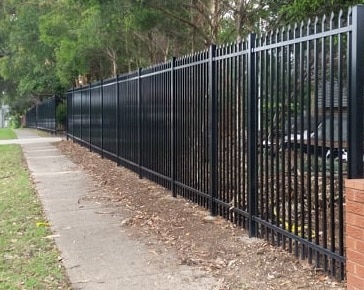
- Footings poured into loosened fill without checking the base material
- Posts established without adequate supporting, after that nudged throughout the established period
- Concrete positioned too completely dry or otherwise combined appropriately, developing gaps around the post
- Incorrect deepness for the fencing type, specifically on gates and high exposure runs
- Poor drain around the fence line, so water threatens soil security over time
Notice what's missing out on from this listing. You don't see "the concrete misbehaved quality" as the main cause. Commonly the concrete is great. The installment process is where the failure is born.
Drainage and water monitoring: the surprise architectural element
Concrete footings can be solid, and the soil can be steady today, but water can transform whatever. Around fences, water problems prevail:
- Downspouts or surface drainage routed toward the fence line
- Soil that holds dampness near the base of footings
- Sprinkler systems that saturate the very same places repeatedly
- Clay or reactive dirts that swell and diminish via seasons
For fencing contractors Melbourne, water drainage judgment is part of the craft. You do not require to build a complete stormwater system for a small fencing, yet you do need to take into consideration where water will certainly go after rain.
Sometimes the fix is straightforward: grading, rerouting downspouts, or adjusting the backfill and ensuring the area around the ground drains rather than traps moisture.
Backfilling: do not leave it to chance
Backfill may resemble a cleaning step, yet it straight impacts settlement and side activity. The goal is to re-establish ground support around the footing without creating paths for water or leaving voids.
A specialist fence installer will:
- Refill to the defined level
- Compact properly where the layout needs it
- Avoid mixing natural material right into the backfill
- Prevent large space pockets that can later on fall down or wash out
If you rush backfilling after the put, you can harm the ground surface or produce micro-gaps. Those voids become a location for water to rest and a powerlessness for future movement.
Gates: where concrete footings deserve additional respect
Gate posts see various pressures. They're not simply supporting a panel, they're taking hinge lots, lock loads, and repeated mechanical anxiety. A gateway can likewise catch wind in a method a fence run typically cannot.
If you're a fencing contractor installing gateways, the ground must be treated as a critical architectural aspect. That implies:
- Correct embedment and ground sizing
- Proper bracing throughout the pour
- Attention to publish tightness, connections, and alignment
- Consideration of dirt conditions and any type of demand for style adjustment
In the field, I've seen gateways stop working because the rest of the fence was "good enough." Then eviction leans, the latch quits aligning, the customer criticizes the joints, and the genuine problem becomes footing rotation.
Working with Melbourne problems (and the clients who request speed)
Fencing specialists Melbourne typically handle scheduling restraints. Professions are reserved out, weather prediction change, and customers want the fence done prior to an event or before a sale.
Here's the compromise that matters most: rate should never ever imply reduced treating time, rushed message alignment checks, or concrete placement that does not consolidate around the post.
If you can not put and establish securely, it's much better to pause than to "push with." Fencing installers who build a track record for doing it properly typically win the long-lasting work, because customers remember that came back to deal with a problem quickly and that didn't develop it in the first place.
A useful ground specification list for fencing contractors
If you want less call backs, have your group job from a basic interior standard. The objective is not to turn every job into an audit, it's to remove obscurity so the ground is set up similarly every time.
- Confirm fence kind, elevation, and exposure to wind
- Inspect dirt conditions at excavation base, and readjust if base product is weak or unstable
- Set correct article embedment and support for plumb prior to concrete placement
- Place and settle concrete to get rid of spaces, using regular mix workability
- Plan curing, safeguard from washout, and full backfilling and compaction correctly
That list is the distinction between a fence company that delivers repeatable outcomes and one that depends on "good luck."

When to escalate from conventional practice
Most secure fencing work can be completed with an uncomplicated ground method. Yet there are circumstances where you should stop treating the ground as a regular task.
Escalate when you encounter:
- Very weak soils or apparent fill product at depth
- Persistent groundwater or problems where excavation walls collapse
- Significant quality modifications along the fence line
- Large entrances, hefty automated entrance frameworks, or uncommonly high loads
- Structural requirements from a designer or council documentation that dictate footing design
As a fence installer, your task is to make safe, realistic choices. The cheapest footing is not always the most effective one, but the most pricey failing is generally the one that happens after the fencing is total and the website looks finished.
Final thoughts for fencing business, fencing installers, and fencing contractors
Concrete grounds are where fence contractors make reputation. Customers might not recognize the difference in between proper embedment and guesswork, between combined concrete and put spaces, or between soil that's actually proficient and dirt that's just "hard sufficient today."
But they will certainly discover the end results: placement that holds, panels that do not loosen up, entrances that turn real, and fencings that survive the weather condition without developing into a lasting maintenance problem.
If you're running a fence company, educate the crew to treat excavation, blog post placement, concrete workability, and treating as core abilities, not optional bonus. If you're a fence contractor or fencing contractor, develop your estimating and site assessment around what you really find in the ground. Fence installer Melbourne jobs succeed when the footing style matches the dirt, the fence layout matches the tons, and the pour matches the conditions.
Do that, and concrete footings quit being a chore. They come to be the trustworthy structure of a fence that looks exactly on day one and still looks right years later.